The End of a Defining Policy Era
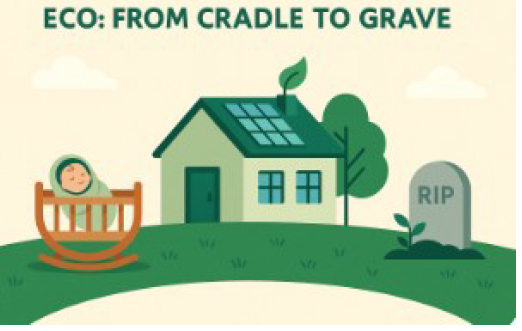
2013 to December 2026, ECO From Cradle to Grave has come to an end. The UK is closing the door on one of its most influential policies. There are lessons to be learnt.
For more than a decade, the Energy Company Obligation shaped how domestic energy efficiency was delivered, particularly for households least able to pay. Its legacy is mixed, but its lessons are invaluable.
Why ECO Was Created
Introduced in 2013, ECO was designed to deliver energy efficiency at scale without major public spending. By placing obligations on large energy suppliers, government created an “always on” funding mechanism, paid for through energy bills. In its early years, the emphasis was on volume. Millions of homes received basic measures such as loft insulation, cavity wall insulation and boiler replacements. Fuel‑poor households were reached at scale, and energy efficiency became a national intervention rather than a niche policy.
The Limits of Volume‑Led Delivery
But this success came with limitations. Early ECO prioritised delivery numbers over long‑term housing outcomes. Measures were often installed in isolation, with little consideration of whole‑house performance or future decarbonisation. While bills fell and emissions reduced, homes were rarely placed on credible pathways toward deep retrofit. As Net Zero targets sharpened, these shortcomings became harder to ignore.
ECO4 and the Shift Toward Quality
ECO marked a significant evolution. Introduced in 2022, it embedded PAS 2035, TrustMark oversight, stronger consumer protections and minimum SAP uplift requirements. For the first time, a whole‑house approach sat at the core of the scheme. Delivery became more professional, standards rose, and retrofit quality improved across the market. In many ways, ECO4 forced the sector to mature.
Structural Weaknesses That Couldn’t Be Fixed
Yet even at its best, ECO remained structurally constrained. It was supplier‑led rather than housing‑led, shaped by obligation economics rather than local need or long‑term asset strategy. Activity often clustered where delivery was most commercially viable, not where housing need was greatest. Short funding cycles and frequent policy changes undermined workforce retention, skills development and long‑term investment, leaving the sector stuck in a cycle of expansion and contraction.
Earlier quality failures, particularly around insulation, also cast a long shadow. Although ECO4 significantly strengthened safeguards, public confidence in retrofit has taken time to recover. Most importantly, ECO was never designed to deliver the depth or coordination of retrofit required to meet Net Zero.
Why ECO From Cradle to Grave, Ends Here
The decision not to introduce ECO5 reflects this reality. Funding energy efficiency through energy bills became politically sensitive during the cost‑of‑living crisis, and the supplier obligation model had reached its limits. What follows is not a policy vacuum, but a shift toward publicly funded, place‑based delivery through the Warm Homes Plan, with local authorities and housing providers taking a strategic lead.
The Post‑ECO4 Challenge
This transition brings opportunity, but also risk. Without a clear, stable framework, there is a danger of losing skills, confidence and delivery momentum. Success in the post‑ECO world will depend less on navigating scheme rules and more on strong governance, good data, long‑term planning and collaboration across housing, health and climate agendas.
Lessons That Must Carry Forward as we see ECO4 From Cradle to Grave
ECO’s legacy is not failure or success, but learning. It proved retrofit can be delivered at scale, highlighted the importance of quality and whole‑house thinking, and exposed the cost of short‑termism. The challenge now is to move beyond schemes and build a housing‑led retrofit system designed to last.