
If you’re planning energy‑efficiency upgrades to your home — insulation, solar panels, heat pumps, ventilation, or a full retrofit — you may have heard the term “Retrofit Coordinator” and wondered:
What do they actually do… and do I really need one?
The short answer:
👉 Yes — if you want your upgrades done properly, safely, and to last.
Let’s break it down in plain English.
What Is a Retrofit Coordinator?
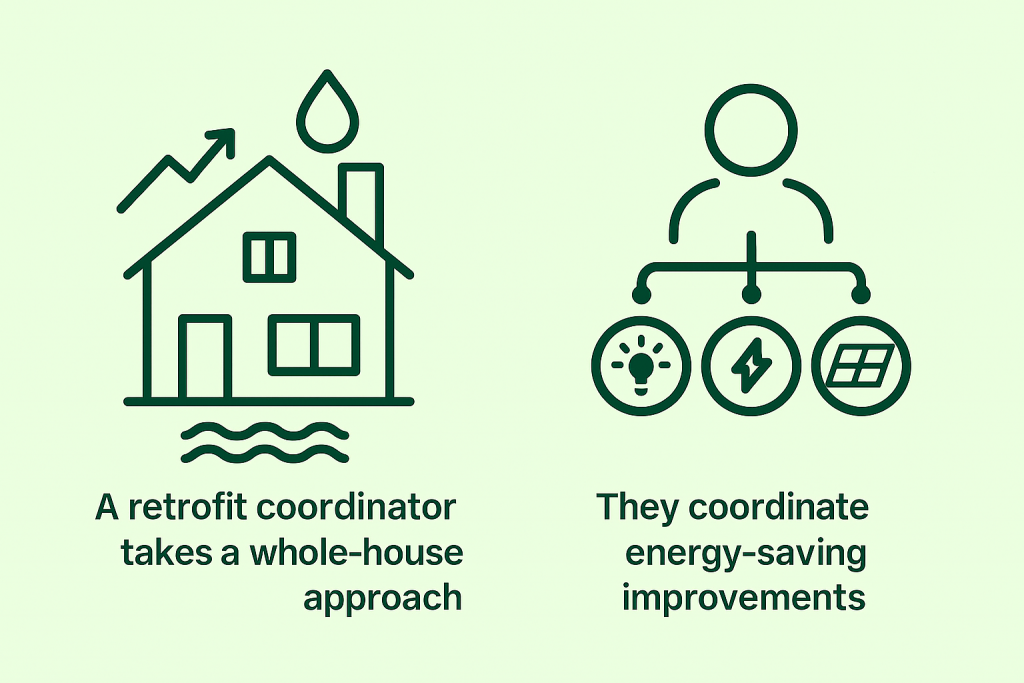
A Retrofit Coordinator (RC) is the person responsible for planning, managing, and quality‑assuring energy‑efficiency improvements to a home.
They are the independent professional who makes sure that:
- The right measures are chosen
- They’re installed in the right order
- They work together as a system
- The home stays healthy, warm, and safe
Think of them as the project conductor — making sure every part of the retrofit works in harmony.
Under the UK’s PAS 2035 standard, most funded or large‑scale retrofit projects require a Retrofit Coordinator, including those delivered under schemes like ECO4 and future Warm Homes Plan programmes.
Why Retrofit Isn’t Just “Fit Stuff, Save Money”
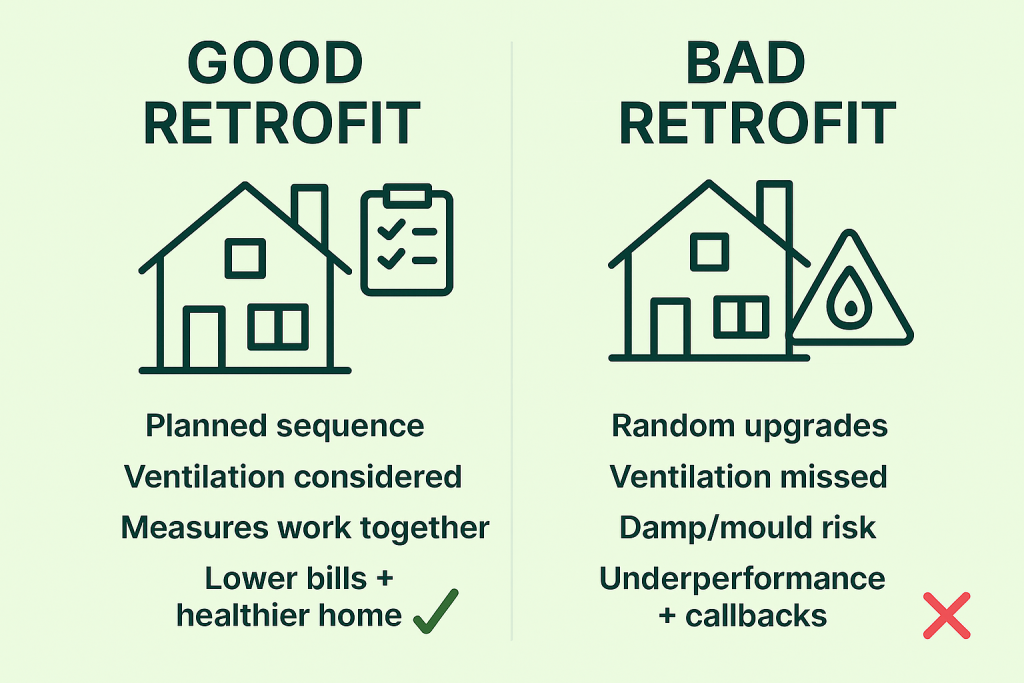
Many homes fail to perform after upgrades because installers often install measures in isolation.
For example:
- Insulation added without ventilation → condensation & mould
- New windows fitted without addressing damp → trapped moisture
- Heat pump installed in a poorly insulated home → high bills & poor comfort
A Retrofit Coordinator prevents this by taking a whole‑house approach.
Retrofit is not about individual products — it’s about how the building behaves as a system.
What Does a Retrofit Coordinator Actually Do?
1. Assess the Home as a Whole
The RC reviews detailed assessments of the property, including:
- Construction type and age
- Existing insulation and heating
- Ventilation and moisture risk
- Occupant needs and lifestyle
This ensures upgrades are appropriate for the building, not just popular or grant‑friendly.
2. Create a Retrofit Plan
Rather than random upgrades, the coordinator develops a step‑by‑step retrofit plan, often called a Medium‑Term Improvement Plan.
This plan:
- Prioritises the most effective measures
- Avoids unintended consequences
- Allows upgrades to be phased over time
- Protects future funding eligibility
It’s essentially a roadmap to a warmer, healthier, lower‑carbon home.
3. Manage Risk (This Is the Big One)
Retrofit Coordinators learn to identify and manage risks such as:
- Damp and condensation
- Overheating
- Poor indoor air quality
- Structural issues
- Occupant disruption
This risk management is mandatory under PAS 2035 and is one of the main reasons coordinators exist in the first place.
4. Coordinate Installers & Designers
On larger projects, a project may involve multiple professionals:
- Retrofit assessors
- Designers
- Installers
- Inspectors
The RC ensures:
- Everyone works to the same plan
- Installations follow the correct sequence
- Changes are controlled and documented
Without this coordination, projects often suffer from delays, rework, or poor performance.
5. Quality‑Assure the Work
A Retrofit Coordinator doesn’t just plan — they check.
They:
- Review designs before work starts
- Monitor installation quality
- Ensure standards are met
- Confirm the home performs as intended
This dramatically reduces the risk of failed installs, callbacks, or long‑term problems.
Why You Want a Retrofit Coordinator (Even If It’s Not Required)
Even when a coordinator isn’t legally required, having one offers huge benefits:
✅ Better performance
Homes upgraded through coordinated retrofit perform closer to expectations — warmer, cheaper to run, and more comfortable.
✅ Fewer problems
Most retrofit horror stories come from poor sequencing or missing ventilation — exactly what coordinators prevent.
✅ Future‑proofing
A retrofit plan ensures today’s upgrades don’t block tomorrow’s improvements or funding.
✅ Peace of mind
You’re not relying on one installer’s opinion — you have an independent professional overseeing the whole process.
Retrofit Coordinator vs Installer: What’s the Difference?
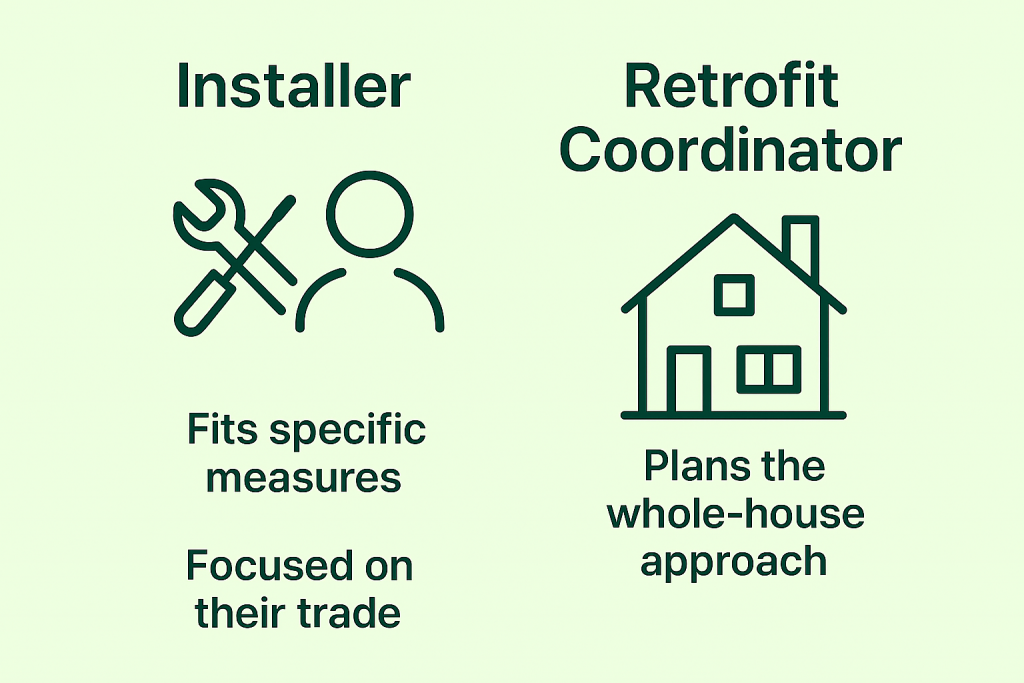
| Installer | Retrofit Coordinator |
|---|---|
| Fits specific measures | Plans the whole‑house approach |
| Focused on their trade | Focused on building performance |
| Works to instructions | Creates and manages the plan |
| May not assess risk | Actively manages risk |
Both are important — but they are not the same role.
When Is a Retrofit Coordinator Required?
A Retrofit Coordinator is usually required when:
- Work is funded under ECO4
- Projects follow PAS 2035
- Multiple measures are installed
- Homes are older or “hard to treat”
- There is a higher risk of damp or poor ventilation
Under the Warm Homes Plan, coordinated retrofit will become even more central.
The Bottom Line
A Retrofit Coordinator isn’t an added cost for the sake of bureaucracy — they exist because retrofit is complex, and when it goes wrong, it can be expensive and harmful. This is especially true for councils and housing associations delivering retrofit at scale — see our guide to retrofit coordination in Liverpool and the North West for a regional example.
If you want:
- A warmer home
- Lower bills
- Healthy indoor air
- Long‑lasting improvements
- Fewer surprises
👉 You want a Retrofit Coordinator.
At Net Zero Gurus, we believe good retrofit starts with good coordination — because doing it right once is always cheaper than fixing it later.